

eSIM vs Physical SIM: Which One Actually Wins for Festival Travel?
eSIM and physical SIM connect to the exact same networks. The real differences show up in how you buy, activate, and manage your connection, and that matters a lot when you’re planning a Fresh Island weekend versus a two-week loop through the Balkans. Short answer: eSIM wins for speed and simplicity, physical SIM often wins on raw price for longer stays.
You’re three days out from flying into Zadar, and you still haven’t sorted out phone data. Sound familiar? It’s the one logistics question that always gets pushed to the bottom of the festival packing list, right under “figure out which stage has the good sunset set.”
So which is it: eSIM or a physical SIM card? The answer depends less on which technology is “better” and more on how long you’re staying and how many borders you’re crossing. Let’s get into it.
In This Article
- What’s the Real Difference Between eSIM and a Physical SIM?
- Physical SIM Card: Pros and Cons
- eSIM: Pros and Cons
- eSIM vs Physical SIM: Pros and Cons Side by Side
- Is eSIM Really Safer Than a Physical SIM?
- Does Your Phone Even Support eSIM? (And What About Mint Mobile?)
- eSIM or Physical SIM for a Quick 3-4 Day Festival Weekend?
- eSIM or Physical SIM for a Longer Trip Through Europe (7+ Days)?
- Do You Need Both? Using eSIM and Physical SIM Together at Zrće Beach

What’s the Real Difference Between eSIM and a Physical SIM?
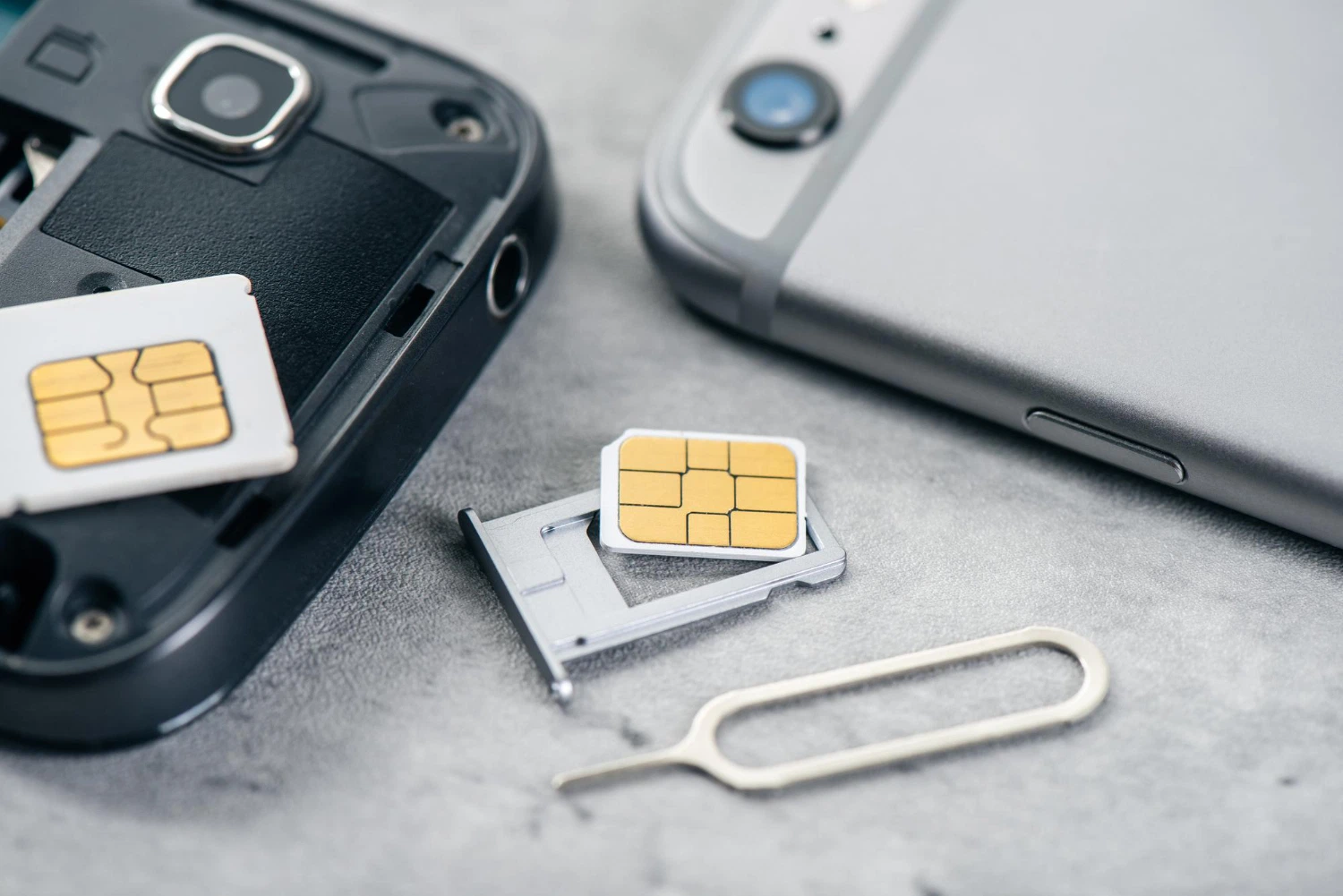
A physical SIM is a small plastic chip you pop into a tray in your phone. An eSIM is a chip that’s already soldered inside your phone, and you activate it by scanning a QR code or using a carrier app. That’s the whole hardware difference between esim and sim: one is removable, one isn’t.
Here’s the part most people miss: neither one changes your actual connection. Both give you access to the same LTE and 5G towers. Reception, speed, and coverage all come down to the carrier and the local network, not whether you’re running an esim vs sim card setup.
According to Apple’s own support documentation, an eSIM is an industry-standard digital SIM that lets you activate a plan without ever touching a physical card. So the difference between esim and sim card isn’t about signal quality at all. It’s about how you buy, install, and manage that signal, plus a few security quirks we’ll get to.
Physical SIM Card: Pros and Cons
The physical sim has been around since the 1990s, and it still works exactly the way you’d expect. You buy a card, you pop it into the tray, you’re connected. No app, no QR code, no login required.
But there’s a catch. You have to actually get that card in the first place, which usually means a kiosk, a store, or a vending machine at arrivals, sometimes with a passport check attached.
| Physical SIM Pros | Physical SIM Cons |
|---|---|
| Works on almost any phone, including older or budget models | Requires finding a store, kiosk, or vending machine on arrival |
| Easy to move between devices in seconds if your phone dies | Some countries require passport or ID registration |
| Usually the cheapest option per GB for long stays in one country | Easy to lose, and easy for a thief to pull and reuse if stolen |
| No app or account setup, just insert and go | Managing multiple countries means swapping cards or paying roaming |
So what does that actually mean for you? If you’re settling into one country for weeks and you don’t mind a short errand on day one, a local physical sim usually still wins on price. If you’re moving fast between countries, the swapping gets old.
eSIM: Pros and Cons
An eSIM flips the whole process around. You can buy and activate a plan before you even leave your house, using nothing but your home Wi-Fi and a QR code.
In my experience covering festival travel for close to a decade, that single detail changes the whole first day of a trip. No line at the airport kiosk, no fumbling with a foreign-language menu at midnight when your flight lands late.
| eSIM Pros | eSIM Cons |
|---|---|
| Activate remotely before you fly, no store visit needed | Needs a fairly modern, eSIM-capable phone |
| Store multiple profiles and switch between them in settings | Moving a profile to a new phone can require carrier involvement |
| Can’t be physically removed if your phone is lost or stolen | Some smaller local carriers still have clunky activation flows |
| Great for multi-country trips using one regional data plan | Travel eSIM packs often cost more per GB than a local prepaid SIM |
Worth pausing on that for a second: eSIM isn’t automatically cheaper. It’s more convenient. Those are two different things, and the brief mixes them up all the time in marketing copy.

eSIM vs Physical SIM: Pros and Cons Side by Side
Put them next to each other and the pattern gets a lot clearer. A quick esim vs physical sim pros and cons rundown shows it’s less “one is better” and more “one is built for speed, the other is built for value.”
| Feature | Physical SIM | eSIM |
|---|---|---|
| Activation | In person, at a store or kiosk | Remote, via QR code or app |
| Device compatibility | Almost universal | Requires eSIM-capable hardware |
| Switching phones | Pop the card out and move it | May need carrier reissue or re-provisioning |
| Multi-country travel | Requires swapping cards or roaming | Store several profiles on one device |
| Typical cost, long stay | Usually cheapest per GB locally | Mid-priced, cheaper than home roaming |
| Theft resistance | Can be physically removed and reused | Cannot be pulled or moved to another device |
Global eSIM adoption backs up how fast this shift is happening. GSMA Intelligence reports that global eSIM smartphone penetration hit 5% by the end of 2025 and is on track to double by the end of 2026. That’s not a niche feature anymore, it’s becoming the default.
But here’s the thing about a physical sim vs esim decision: the table above is a starting point, not a verdict. Trip length changes everything, which is exactly what the next few sections dig into.
Is eSIM Really Safer Than a Physical SIM?
Yes, generally. An eSIM can’t be physically removed from your phone and slid into someone else’s, which closes off one entire category of theft that physical SIMs are exposed to.
This isn’t just a marketing talking point. Regulators have been paying attention to SIM-related fraud for years, mostly because a stolen or swapped SIM can be used to intercept one-time passcodes for banking apps and email.
“Wireless providers must adopt secure methods of authenticating a customer before redirecting a customer’s phone number to a new device or provider, and must immediately notify customers whenever a SIM change or port-out request is made.”
Federal Communications Commission, Report and Order FCC 23-95
The short answer? It depends on how much you trust your carrier’s verification process either way. A physical SIM isn’t inherently unsafe, it’s just an object that can be lost, stolen, or swapped by a con artist calling your carrier’s support line. eSIM removes the “lost object” part of that risk, but a determined scammer can still target your account through social engineering, no matter which type of SIM you’re running.
Does Your Phone Even Support eSIM? (And What About Mint Mobile?)
Before any of this matters, check whether your phone can actually run an eSIM. Most flagship phones from the last several years can, but plenty of budget and older devices still can’t.
Generally speaking, here’s where the sim vs esim compatibility line falls:
- iPhones from the XS, XR, and newer generally support eSIM, with recent US models shipping eSIM-only
- Most Samsung Galaxy S and Z-series phones from the last few generations support eSIM
- Google Pixel phones from the Pixel 3 onward generally support eSIM
- Many budget Android phones, especially older or region-specific models, still don’t
If you’re on a US carrier like mint mobile esim plans, activation typically happens through their app, and it’s a fairly painless process if your phone qualifies. Always double check your specific carrier and device combination before you fly, since eSIM support can vary by region even on the same phone model.
eSIM or Physical SIM for a Quick 3-4 Day Festival Weekend?
For a short trip, eSIM wins, and it’s not close. Flying in for a long weekend at Fresh Island means you want your phone working the second you land, not after standing in a kiosk line while your friends already made it to the pregame.
Here’s where it gets interesting: even if a local physical SIM would technically be a few euros cheaper, that gap barely matters over three or four days. You’re not burning enough data for the per-GB difference to add up to much.
The way I look at it after years of packing for weekend festival runs, the time you save by activating an eSIM from your couch at home is worth more than the small price difference. Buy the travel eSIM before you leave, keep your home SIM active for calls and texts, and you’re done before you’ve even packed your bag.
eSIM or Physical SIM for a Longer Trip Through Europe (7+ Days)?
This is where the math shifts. If you’re spending a week or more in one country, a local physical SIM will usually beat a travel eSIM pack on price, sometimes by a wide margin once you factor in bigger data bundles.
But there’s a catch that a lot of US-focused guides completely skip: if you’re an EU resident traveling within the EU or EEA, you may not need to buy anything at all. Under the European Commission’s Roam Like at Home rules, you keep your home data, minutes, and texts at no extra charge while traveling to other participating countries, a policy guaranteed to run until at least 2032.

That coverage area keeps growing too. As of January 2026, both Ukraine and Moldova joined the roam-like-at-home area, so if your trip stretches beyond Croatia into neighboring countries, check the current list before assuming you need a new SIM at every border. If you’re coming from outside the EU on a multi-country loop, an eSIM regional plan still tends to be the simpler call, even if it costs a bit more than hunting down a local SIM in every city.
Do You Need Both? Using eSIM and Physical SIM Together at Zrće Beach
If your phone supports it, running a sim card vs esim setup side by side is honestly the smartest move for festival travel specifically. Keep your home number on the physical SIM for calls, banking apps, and two-factor codes, and put your data on a travel eSIM.
And it gets more complicated in a good way once you think about backup plans. A few scenarios where dual coverage actually saves your night:
- Your phone dies or gets damaged in the crowd, and a friend can quickly transfer your eSIM data plan to their device using a QR code if your carrier allows it
- You lose signal on one network during peak festival hours when everyone’s phone is hammering the same towers
- You want a backup line active in case your primary SIM gets lost during a beach day or a late night out
Before you head over to check Fresh Island ticket details, it’s worth sorting your connectivity setup a week or two ahead of time. That way it’s one less thing to think about once you’re actually on the sand.
Frequently Asked Questions
What is the difference between an eSIM and a SIM card?
A physical SIM card is a removable chip you insert into your phone’s SIM tray, while an eSIM is built into the phone itself and gets programmed remotely through a QR code or carrier app. Both connect to the exact same mobile networks, so there’s no difference in call quality, data speed, or coverage. The real difference between esim and sim card comes down to how you buy and manage the connection, not the connection itself. If your phone supports both, you can even run one of each at the same time.
What is the difference between a SIM and an eSIM in everyday use?
Day to day, the biggest difference between sim and esim is how you deal with them when something changes. Swapping a physical SIM into a new phone takes a few seconds. Moving an eSIM profile sometimes means contacting your carrier, especially if the profile is locked to your old device’s IMEI number. On the flip side, eSIM lets you store several plans at once and switch between them in your settings menu, which a physical SIM simply can’t do without a second SIM slot.
Is eSIM better than a physical SIM?
It depends on what you’re optimizing for. For short trips, multi-country travel, or general convenience, most people find is esim better than physical sim holds up, since you can activate before you fly and avoid store visits entirely. For long stays in a single country where you’re watching your budget, a local physical SIM is often the cheaper choice per gigabyte. Neither one is a universal upgrade, they’re just built for different situations.
Is eSIM better than a regular SIM for security specifically?
Generally yes. Because an eSIM can’t be physically removed and reinserted into another phone, it closes off a common avenue that scammers use to hijack a phone number. Whether is esim better than sim from a pure security standpoint still depends partly on your carrier’s own verification standards, since account-level SIM swap fraud can technically still happen through social engineering regardless of which SIM type you’re using. Strong account passwords and app-based two-factor authentication help either way.
Can I use an eSIM and a physical SIM at the same time?
Yes, as long as your phone supports dual SIM functionality, which most phones released in the last several years do. This setup is popular for exactly the kind of festival travel Fresh Island attendees deal with: keep your home number active on the physical SIM for calls and banking apps, and run your data through a travel eSIM. Some newer phones, including certain US iPhone models, are eSIM only and don’t have a physical SIM tray at all, so double check your specific model before you plan around this.
Is eSIM easy to get and use along the Croatian coast for Fresh Island?
Yes. Croatian carriers support eSIM activation, and most major travel eSIM providers sell regional or country-specific data plans that cover the Zadar and Zrće Beach area without any trouble. If you’re traveling from another EU country, you may not even need a new SIM of any kind, since your home data plan should work under the EU’s roaming rules. If you’re coming from outside the EU, activating a Croatia-specific eSIM before you fly is usually the smoothest option for a festival-length stay.
Which One Actually Wins for Your Trip
So, esim vs sim: which one should actually go on your phone before Fresh Island? If you’re flying in for a long weekend, grab a travel eSIM before you leave and stop thinking about it. The time saved on arrival day is worth more than the few euros a local SIM might save you.
If you’re building a longer trip around the festival, maybe a week in Croatia followed by island hopping or a swing through neighboring countries, run the numbers on a local physical SIM once you land, especially if you’re coming from outside the EU’s roaming zone. And if you’re an EU resident already, check whether Roam Like at Home has you covered before buying anything at all.
After a decade of covering festival logistics, the pattern I keep coming back to is simple: eSIM buys you speed and flexibility, physical SIM buys you the lowest possible price on a long, single-country stay. Match the tool to the trip, keep a backup line active if your phone allows it, and you’ll spend a lot less time worrying about signal and a lot more time worrying about which stage to catch next.

Julia King has spent the better part of a decade chasing music festivals, weekend getaways, and the kind of travel chaos that makes for a good story afterward — and turned that into a practical, no-nonsense approach to writing about it. She covers everything from Europe’s nightlife scene and underrated party destinations to the gear that makes festival weekends survivable, from power banks that don’t die by day two to earplugs that actually protect your hearing without killing the music; her focus is less on dream-destination lists and more on what will actually happen and how to plan around it. When she’s not researching a new city’s nightlife or testing travel gear, Julia is usually planning her next trip with a festival lineup as the excuse and a backup plan just in case.
Sources
- GSMA Intelligence. “eSIM mass market deployment moves from forecast to fact.” GSMA, 2026.
- Federal Communications Commission. “FCC Adopts Rules to Protect Consumers’ Cell Phone Accounts.” FCC, 2023.
- European Commission. “Roaming: connected anywhere in the EU at no extra charge.” Shaping Europe’s Digital Future, 2026.
- Apple Support. “About eSIM.” Apple, 2024.
- Council of the European Union. “EU mobile roaming benefits extended to Moldova and Ukraine as of 2026.” Consilium, 2025.