

Hostel vs Hotel: What Actually Fits Your Trip
Hostel vs hotel isn’t a question with one right answer. Hostels win on cost, community, and kitchen access, especially for solo travelers on longer trips. Hotels win on privacy, quiet, and recovery, especially for couples, short breaks, and work trips. This guide breaks down real prices, comfort trade-offs, and which one fits your specific trip to Europe.
I’ve slept in more dorm beds than I can count, and I’ve also paid way too much for a hotel room just to sleep through a flight delay. Both choices made sense at the time. That’s the honest starting point for this whole hostel vs hotel debate: it’s not really about which one is objectively better, it’s about matching the format to the trip you’re actually taking.
Are hostels cheaper than hotels? Almost always, yes. Do hotels win on comfort and privacy? Also yes. So what does that actually mean for you? It depends on who you’re traveling with, how long you’re staying, and what kind of night’s sleep you need. Let’s get into the actual numbers and trade-offs.

In This Article
- What Is a Hostel vs a Hotel, Exactly?
- How Much Do Hostels Cost in Europe Compared to Hotels?
- Privacy, Noise, and Comfort: Where Each One Wins
- Social Life and Atmosphere: Hostels vs Hotels
- Amenities, Services, and Safety: What You Actually Get
- Which One Fits Your Trip? A Traveler-Type Breakdown
- Short Trip vs Long Trip: Does Trip Length Change the Answer?
- So, Which Should You Actually Book?
What Is a Hostel vs a Hotel, Exactly?
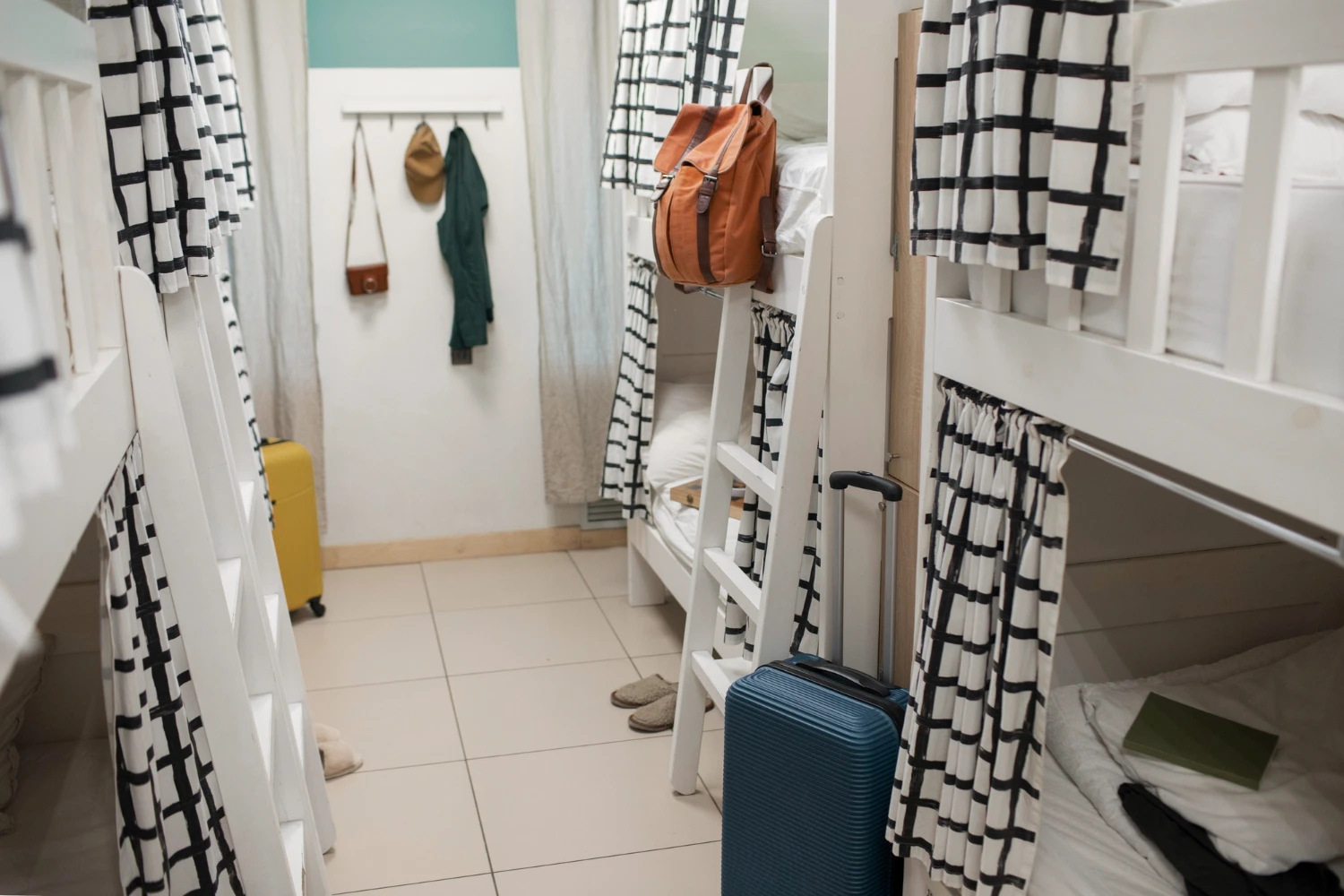
A hostel is budget accommodation built around shared space: dorm beds in a room with anywhere from four to twenty other travelers, shared bathrooms, and common areas like a kitchen or a lounge. A hotel is a private room, your own bathroom, and a front desk you can call at 3am. That’s the core difference between a hostel and a hotel, and everything else in this article branches off from it. If you’re wondering what is a hostel vs hotel in the simplest possible terms, it’s shared space built for connection versus private space built for control.
So what’s the difference between a hotel and a hostel beyond the room setup? Mostly price, atmosphere, and how much of your own space you’re willing to trade for a lower nightly rate.
What is a hostel in Europe, specifically? It’s usually a converted building near the city center or train station, run by a small team, often with a bar or courtyard downstairs. Many hostels here also offer private rooms with an attached bath, so you’re not locked into a dorm if you don’t want one. What are hostels in Europe known for beyond the bed? Community. You show up alone and by dinner you’ve got people to explore with.
Hotels, meanwhile, range from bare-bones budget chains to five-star resorts, but the format stays consistent: daily cleaning, your own key, and a level of predictability hostels don’t really aim for. Neither format is “better” in the abstract. They’re built for different kinds of nights.
How Much Are Hostels in Europe, and How Do They Compare to Hotels?
Here’s what the data actually shows: hostel dorm beds in Western Europe run roughly €20 to €40 a night in major cities, while Eastern Europe often drops under €15 per night for a bed. Budget hotel rooms in the same cities typically start around €60 and climb from there, before taxes and fees.
Take Lisbon as an example. A hostel dorm bed there runs around $19 a night, while a basic budget hotel room lands somewhere between $45 and $65. That’s less than half the price for the hostel option, and it’s a pattern that holds across most europe hostel markets, not just Portugal. Any europe hostels comparison you run city by city tends to land on the same basic ratio.
| Region | Hostel Dorm Bed (per night) | Budget Hotel Room (per night) |
|---|---|---|
| Eastern Europe | Under €15 | €40 – €70 |
| Western Europe (major cities) | €20 – €40 | €60 – €120 |
| Peak weekends, popular cities | Up to €80–100 | €100+ |
But there’s a catch. Weekend pricing in cities like Barcelona or Paris can push hostel beds up near €80 to €100, which starts closing the gap with a budget hotel room split between two people. Prices aren’t fixed, they move with demand the same way flights do.
City-by-city budget breakdowns, including daily cost guides for Europe, show the same split holding from Lisbon to Krakow. Many hostels also offer weekly discounts, often 15 to 20 percent off for stays of five nights or more, which matters if you’re doing a longer European loop. Add in a guest kitchen, and cooking even one meal a day can save another $8 to $20 daily depending on the city. Stack those savings over a week and the gap between hostel and hotel spend gets significant fast.
Privacy, Noise, and Comfort: Where Each One Wins
Hotels win this category outright. You get your own room, your own bathroom, and a door that locks with just your key in it. If you need real sleep, that’s worth paying for.
Hostels ask you to trade some of that comfort for cost. You’re sharing a room with strangers, which means variable snoring, late check-ins, and the occasional 2am zipper-on-a-backpack situation. Good hostels manage this with lockers, curtained bunks, and quiet hours, but you’re still not fully in control of your environment.
Here’s where it gets interesting: the gap narrows if you book a private room within a hostel. You get a locked door and your own space, often at a lower price than a standard hotel room, while still having access to the kitchen and common areas downstairs. It’s a middle path a lot of travelers don’t realize exists.
- Hotel: full privacy, controlled noise, daily housekeeping
- Hostel dorm: shared space, variable noise, lockers instead of a locked door
- Hostel private room: locked door plus shared common areas, often cheaper than a hotel
Worth pausing on that for a second, because it’s the detail most comparison articles skip entirely.
Social Life and Atmosphere: Hostels vs Hotels
Hostels vs hotels comes down to a simple contrast: one is built for meeting people, the other is built to let you avoid them entirely if you want to. Hostel common rooms, bars, and organized pub crawls exist specifically to get strangers talking. Show up solo and by night two you likely have people to grab dinner with or split a day trip with.
Hotels vs hostels on this front isn’t close. You check in, take the elevator, and close your door. Unless you make a deliberate effort at the bar or breakfast room, you’re unlikely to meet another guest. For some travelers that’s exactly the point. For others, especially solo travelers, it’s the biggest thing they’d miss.
“Affordability and low cost of living were identified as the main factors shaping where solo travelers choose to go.”
Statista, Solo Travelers Report, 2024
That statistic lines up with what I’ve seen firsthand covering Europe’s festival and nightlife circuit for years: budget and social connection travel together. People aren’t just picking hostels to save money, they’re picking them because the savings and the social scene come as a package deal.
Amenities, Services, and Safety: What You Actually Get
Hotels generally offer more built-in service: daily cleaning, fresh towels, sometimes room service or a concierge who can book a restaurant for you. Many also run 24-hour front desks, which genuinely helps if you’ve got a 4am flight or a late arrival into an unfamiliar city.
Hostels keep it leaner but often more useful for a budget trip: guest kitchens, laundry, free walking tours, and staff who know exactly which local spots are worth your time and which are tourist traps. Security in hostels relies on lockers, key-card access, and a bit of personal vigilance rather than a locked door with only your key.
- Hotel amenities: private bathroom, daily housekeeping, concierge, 24-hour reception
- Hostel amenities: guest kitchen, laundry, lockers, organized activities, local tips from staff
Neither setup is unsafe when it’s well run. But there’s a real difference in how much personal vigilance each one asks of you, and that’s worth factoring in if you’re traveling somewhere unfamiliar for the first time.

Which One Fits Your Trip? A Traveler-Type Breakdown
The short answer? It depends entirely on who’s booking. A hostel v hotel decision looks completely different for a solo backpacker than it does for a couple on a long weekend, so it helps to break it down by traveler type instead of treating this as one universal question.
Solo, budget-conscious, want to meet people: hostel, easily. You save on both the room and food, and you get a built-in social network from night one. That trend lines up with a broader shift toward independent travel, with the global solo travel market growing fast over the past few years. This is also where the hostel vs hotel Europe conversation gets the most one-sided, since Europe’s hostel scene is famously strong and well-reviewed.
Couples or two friends traveling together: the math shifts. Two dorm beds often cost close to what a budget hotel double runs, so paying slightly more for privacy usually makes sense. In my experience covering festival trips across the continent, this is the exact point where most travelers switch their booking habits without even realizing it.
Business trips or anything requiring focus: hotel, no contest. Hostel common rooms are great for socializing and genuinely rough for a client call or a deadline. If you need quiet to work, book the private room.

Short Trip vs Long Trip: Does Trip Length Change the Answer?
Yes, and this is the part most people miss when they’re planning a Europe itinerary. For a short 2 to 4 night city break, the total savings from a hostel versus a cheap hotel can be modest, and sleep quality starts to matter more than a few euros saved per night.
For longer stays, staying in hostels in Europe pays off more clearly. Weekly discounts kick in, kitchen access starts saving real money, and the social momentum builds the longer you’re plugged into that scene. Across the EU, hotels and similar accommodation still account for 63 percent of all tourist nights, but that figure includes every type of traveler, not just the budget-conscious segment hostels are built for.
One pattern I’d recommend from years of doing exactly this: on trips longer than a week, mix formats. Four or five nights in a hostel, then one or two in a budget hotel to actually sleep, do laundry, and reset before the next leg. It’s not cheating the system, it’s just smart trip design.
So, Which Should You Actually Book?
There’s no universal winner here, and honestly, that’s the whole point. The difference between hostel and hotel really comes down to what you value more on a given night: cost and connection, or privacy and control. Hostels make sense when you’re solo, budget-focused, and want to meet people along the way. Hotels make sense when privacy, quiet, and a predictable night’s sleep matter more than saving a few euros.
The line between them is blurring anyway. Hostels increasingly offer private rooms with real design, and budget hotels are picking up more casual, social touches than they used to. Most experienced travelers I know, myself included, don’t pick a side. They pick based on the night, not the brand.
If you’re heading to a festival weekend or bouncing between cities on a longer trip, it’s worth planning your accommodation the same way you’d plan the rest of the trip: deliberately, not by default. Check out Fresh Island’s travel guides for more on where to stay and how to budget your next European trip.
Frequently Asked Questions
What is the difference between a hostel and a hotel?
A hostel typically offers shared dorm-style beds with communal bathrooms and common areas like kitchens and lounges, while a hotel gives you a private room with your own bathroom. Hostels are built around a social, budget-friendly model, while hotels prioritize privacy and consistent service. Many hostels now also offer private rooms, which blurs the line a bit, but the core difference between a hostel and a hotel still comes down to shared versus private space. Price usually follows that same divide, with hostels coming in significantly cheaper per person.
What is the difference between a hotel and a hostel in terms of daily cost?
On average, a hostel dorm bed in Europe costs somewhere between €15 and €40 a night, while a budget hotel room typically starts around €60 and climbs from there. Add in guest kitchen access, which can save $8 to $20 a day on food, and the total daily cost gap grows even wider. For two people traveling together, that gap narrows considerably since a hotel room gets split two ways. It’s worth running the actual math for your specific trip rather than assuming one option is always cheaper.
Are hostels always cheaper than hotels?
Almost always for solo travelers, but not universally. During peak weekends in popular cities like Barcelona or Paris, hostel dorm prices can spike toward €80 to €100 a night, which starts to close the gap with a budget hotel room, especially if that room is shared. Weekday and off-season travel keeps the hostel price advantage strong. The short answer is that hostels win on price most of the time, but it’s not a guarantee, and demand-based pricing applies to both formats.
What is a hostel in Europe, specifically, and is it the same as a youth hostel?
A hostel in Europe is budget accommodation offering shared dorm beds, communal bathrooms, and common spaces like kitchens or lounges, often with optional private rooms available too. The term “youth hostel” is a bit outdated. Despite the name, hostels welcome travelers of all ages, not just students or twenty-somethings. What actually defines a hostel isn’t the age of the guests, it’s the shared, community-oriented setup and the lower price point that comes with it.
Is it safe to stay in hostels in Europe?
Generally, yes, especially at well-reviewed hostels with lockers, key-card access, and staffed front desks. Security in a hostel relies more on personal vigilance than in a hotel, since you’re sharing space with people you don’t know. Bringing a small padlock for your locker and keeping valuables on you at night are common-sense habits most experienced hostel travelers pick up quickly. Reading recent reviews before booking is one of the best ways to gauge how seriously a specific hostel takes safety.
Can couples or families stay in hostels, or is this strictly for solo travelers?
Couples and small families absolutely can stay in hostels, most of which offer private rooms alongside standard dorms. That said, once you’re booking for two or more people, the price advantage over a budget hotel shrinks significantly, since two dorm beds can cost close to what a hotel double runs. Families traveling with young kids often lean toward hotels for the predictability and quiet, while couples comfortable with a more communal vibe sometimes still choose a hostel’s private room to stay closer to the social scene.

Julia King has spent the better part of a decade chasing music festivals, weekend getaways, and the kind of travel chaos that makes for a good story afterward — and turned that into a practical, no-nonsense approach to writing about it. She covers everything from Europe’s nightlife scene and underrated party destinations to the gear that makes festival weekends survivable, from power banks that don’t die by day two to earplugs that actually protect your hearing without killing the music; her focus is less on dream-destination lists and more on what will actually happen and how to plan around it. When she’s not researching a new city’s nightlife or testing travel gear, Julia is usually planning her next trip with a festival lineup as the excuse and a backup plan just in case.
Sources
- Eurostat. “Tourism Statistics – Annual Results for the Accommodation Sector.” European Commission, 2026.
- Eurostat. “EU Tourism Nights at Record 3.08 Billion in 2025.” European Commission, 2026.
- Statista. “Solo Travelers – Statistics & Facts.” Statista, 2024.
- Hostelz.com. “How Much Do Hostels Cost Around the World? Hostel Price Index 2026.” Hostelz, 2026.
- The Savvy Backpacker. “Backpacking Through Europe Cost.” The Savvy Backpacker, 2026.
- Grand View Research. “Solo Travel Market Size, Share & Trends Report, 2026-2033.” Grand View Research, 2026.