
Festival Napa Valley: Where World-Class Music Meets Wine Country
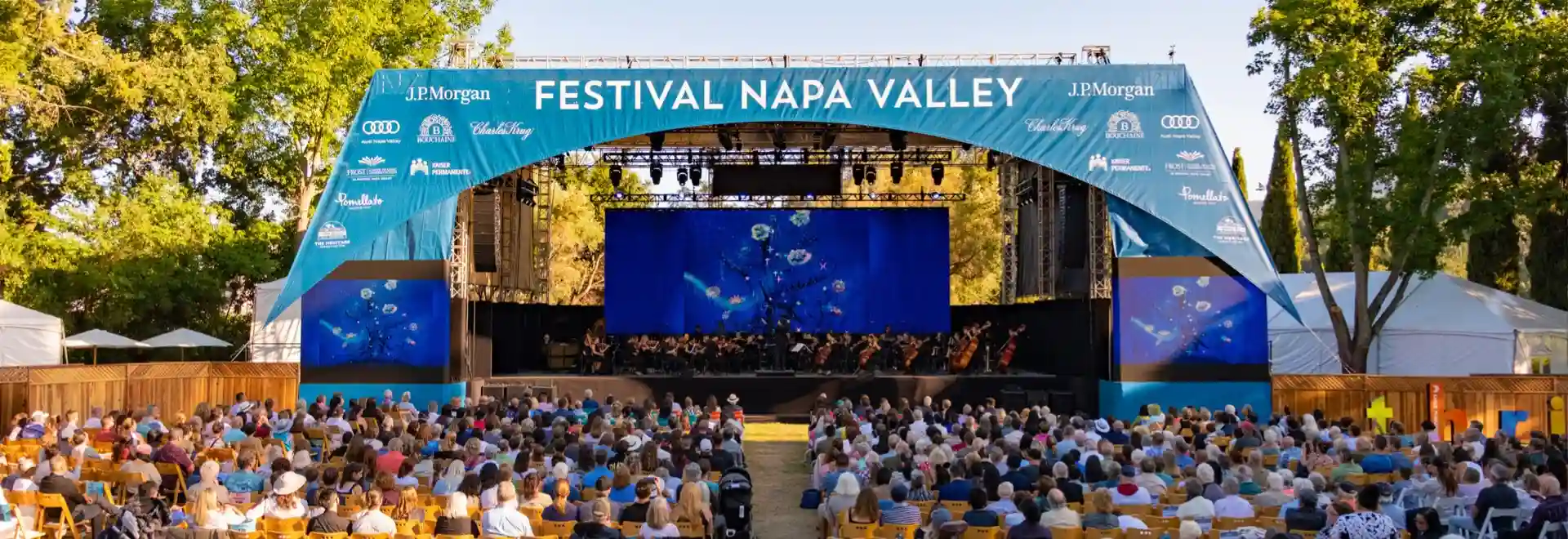
Festival Napa Valley is a nonprofit performing arts festival held every July across wineries, historic estates, and landmark venues throughout Napa Valley. It combines free outdoor concerts, ticketed galas, and salon performances featuring internationally recognized classical and opera artists, with proceeds funding the Blackburn Music Academy’s free music education programs. The festival pairs world-class arts programming with Napa Valley’s wine culture, creating a cultural experience unlike any other festival in California.
Festival Napa Valley is one of California’s most distinctive annual cultural events: a week-long celebration that pairs world-class classical music, opera, and performing arts with the wine culture Napa Valley is famous for globally. It takes place each July across some of the most beautiful venues in the region, drawing artists and audiences from across the country and internationally.
If you’re curious about what this festival is and why it attracts such serious attention in both arts and wine circles, here’s the full picture.
In This Article
What Is Festival Napa Valley
Festival Napa Valley is a nonprofit arts organization that hosts a week-long performing arts festival in Napa Valley every summer. The event features a combination of free outdoor concerts, galas, master classes, and intimate salon performances across venues that include wineries, historic estates, and landmark sites in the valley.
The festival was founded with a mission centered on arts education alongside performance, and that dual purpose shapes its programming distinctly. It is not a commercial music festival in the typical sense: there are no general admission wristbands or camping fields. Instead, it operates more like a curated arts week, with events that range from fully free community performances to ticketed gala evenings that raise funds for its education programs.
The nonprofit structure matters in practice: proceeds from ticketed events support the Blackburn Music Academy, a free music education program for young people in Napa Valley. Timothy Blackburn, for whom the academy is named, was central to the festival’s educational mission, and his influence continues in the programming philosophy.
The Venues That Define the Festival
Napa Valley’s landscape is part of what makes this festival unlike any other performing arts event in California. Performances take place across a range of locations that each bring a different character to the experience.
Charles Krug Winery, one of Napa Valley’s oldest estates, hosts concerts where audiences sit among the vineyards. The Mont La Salle Chapel provides an intimate, acoustically beautiful setting for chamber performances.
The Four Seasons Resort Napa Valley has hosted salon events and private performances. Stanly Ranch Spa and the broader resort property brings a hospitality element to the festival’s social calendar.
These venues are not standard concert halls. They’re working wineries, historic estates, and luxury properties that happen to become performance spaces for one week each year. That quality gives Festival Napa Valley its distinctive tone: cultured, unhurried, oriented toward the full sensory experience of a place rather than purely the music.
The Outdoor Free Concerts
One of the festival’s defining features is its commitment to free public performances. The outdoor concerts, held at public spaces in Napa, draw significant community attendance and are central to the organization’s mission of making classical and operatic music accessible.
These performances are full-scale productions, not stripped-down samplers, featuring the same caliber of artists who appear at the ticketed gala events.
The free concerts also attract visitors who are in Napa Valley for other reasons: wine tourism, weekend getaways, culinary travel, and they experience the festival unexpectedly. This crossover between wine country tourism and world-class live performance is what distinguishes Napa Valley festival events from arts programming in conventional urban settings.
Artists and Performances at Festival Napa Valley
Festival Napa Valley books internationally recognized classical artists, opera singers, conductors, and chamber ensembles. Artists like Nadine Sierra, one of opera’s leading sopranos, have appeared at the festival, as have acclaimed musicians across violin, piano, and orchestral performance.
Monica Mancini, daughter of the legendary Henry Mancini, has been part of the festival’s programming, bringing a distinctly American classical pop tradition to the lineup.
Delirium Musicum, a period instrument ensemble known for bringing early music to life with energy and historical accuracy, has performed at the festival and represents the event’s range: from grand opera to baroque chamber music, the programming does not settle into a single classical genre.
Fabrice Calmels, the principal dancer of Joffrey Ballet, and Joshua Bell, one of the world’s most celebrated violinists, have both been associated with festival programming, reflecting the breadth of the event’s artistic ambitions. The festival genuinely mixes disciplines: dance, vocal performance, instrumental soloists, and chamber ensembles all appear across the week.
The Gala Events and Wine Culture Connection
The ticketed gala events are where the wine and music overlap most visibly. These evenings typically take place at Napa Valley wineries and estates, where dinners, tastings, and live performance combine into a single experience.
The connection is not superficial. The festival’s major donors and supporters are often deeply embedded in Napa Valley’s wine industry, and figures like Jean-Charles Boisset (of the Boisset wine family) and other prominent valley personalities are associated with the event’s philanthropic network.
The Taste of Napa events, as the festival sometimes frames its hospitality programming, give attendees access to wines from producers across the valley alongside performances. For wine collectors and enthusiasts who also have serious interest in classical music, this combination is genuinely rare. Most wine events and most music events don’t intersect at this level of quality.
Richard Kramlich and other philanthropists from Silicon Valley and San Francisco’s financial community have been major supporters of the festival, which is a consistent pattern in Napa Valley’s philanthropic circles: technology wealth meeting arts patronage in a wine country setting.
How Festival Napa Valley Fits Into Broader Napa Valley Tourism
Napa Valley in July is already at its tourism peak. Wine tasting, culinary tourism, cycling through the vineyards, and hiking on Napa Valley’s trails draw visitors throughout the summer. The festival adds a cultural dimension to what is already a full week or weekend of activities.
For visitors, the free outdoor concerts provide a no-cost entry point to the festival experience, and the hiking trails and winery routes offer daytime activity before evening performances. The combination of outdoor recreation and high-quality cultural programming makes a July visit to Napa Valley during the festival week particularly rich.
If you’re documenting the experience, the venues, the performances, the landscape, a dedicated camera will serve you far better than a phone. Vineyard lighting at dusk and indoor concert settings both reward a quality lens and sensor. This guide to the best point-and-shoot cameras for concert photography covers compact options worth considering.
And if Napa Valley inspires you to look at other destination-driven arts experiences around the world, the guide to cheap European city breaks offers a framework for planning cultural trips on different budgets.
Why Festival Napa Valley Stands Apart
Most performing arts festivals are defined entirely by their programming. Festival Napa Valley is defined by the combination of its programming, its place, its philanthropic purpose, and its integration with the community it serves.
The Blackburn Music Academy, the festival’s core educational beneficiary, gives the galas and the wine dinners a function beyond entertainment: they fund free music education for children who would otherwise have no access to it.
That combination of world-class performance, landmark venues, wine culture, and genuine community investment is what makes Festival Napa Valley worth understanding on its own terms, not just as an arts calendar entry.

Julia King has spent the better part of a decade chasing music festivals, weekend getaways, and the kind of travel chaos that makes for a good story afterward — and turned that into a practical, no-nonsense approach to writing about it. She covers everything from Europe’s nightlife scene and underrated party destinations to the gear that makes festival weekends survivable, from power banks that don’t die by day two to earplugs that actually protect your hearing without killing the music; her focus is less on dream-destination lists and more on what will actually happen and how to plan around it. When she’s not researching a new city’s nightlife or testing travel gear, Julia is usually planning her next trip with a festival lineup as the excuse and a backup plan just in case.