
What Is Coachella? Everything You Need to Know About the Festival
Coachella is the Coachella Valley Music and Arts Festival, an annual outdoor music and arts event held in Indio, California. It runs across two consecutive weekends every April, drawing around 125,000 people per day across six stages, with a lineup that spans pop, rock, hip-hop, electronic music, and Latin artists. It is consistently ranked as the highest-grossing music festival in the world.
You’ve seen the name everywhere. Social media floods with it every April. News cycles cover the headliners months in advance. Fashion weeks generate less content than a single Coachella weekend. But if you’ve never been, or you’ve simply never looked it up, the basics are easy to miss. Here’s a complete breakdown of what Coachella actually is: where it’s held, who runs it, what happens there, how big it is, what it costs, and why it became the cultural event it is today.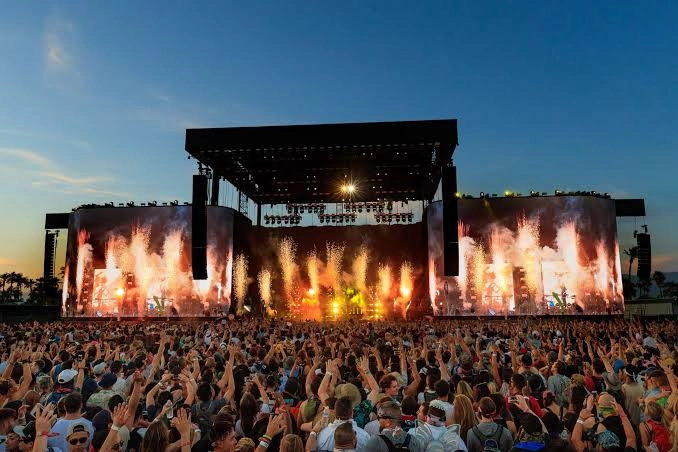
In This Article
- What Is Coachella?
- Where Is Coachella Held?
- When Was Coachella Founded?
- Who Organizes Coachella?
- How Does Coachella Work?
- What Happens at Coachella?
- How Many People Does Coachella Hold?
- Is Coachella the Biggest Music Festival in the World?
- How Much Does Coachella Cost?
- Why Is Coachella So Famous?
- Coachella vs. European Music Festivals
What Is Coachella?
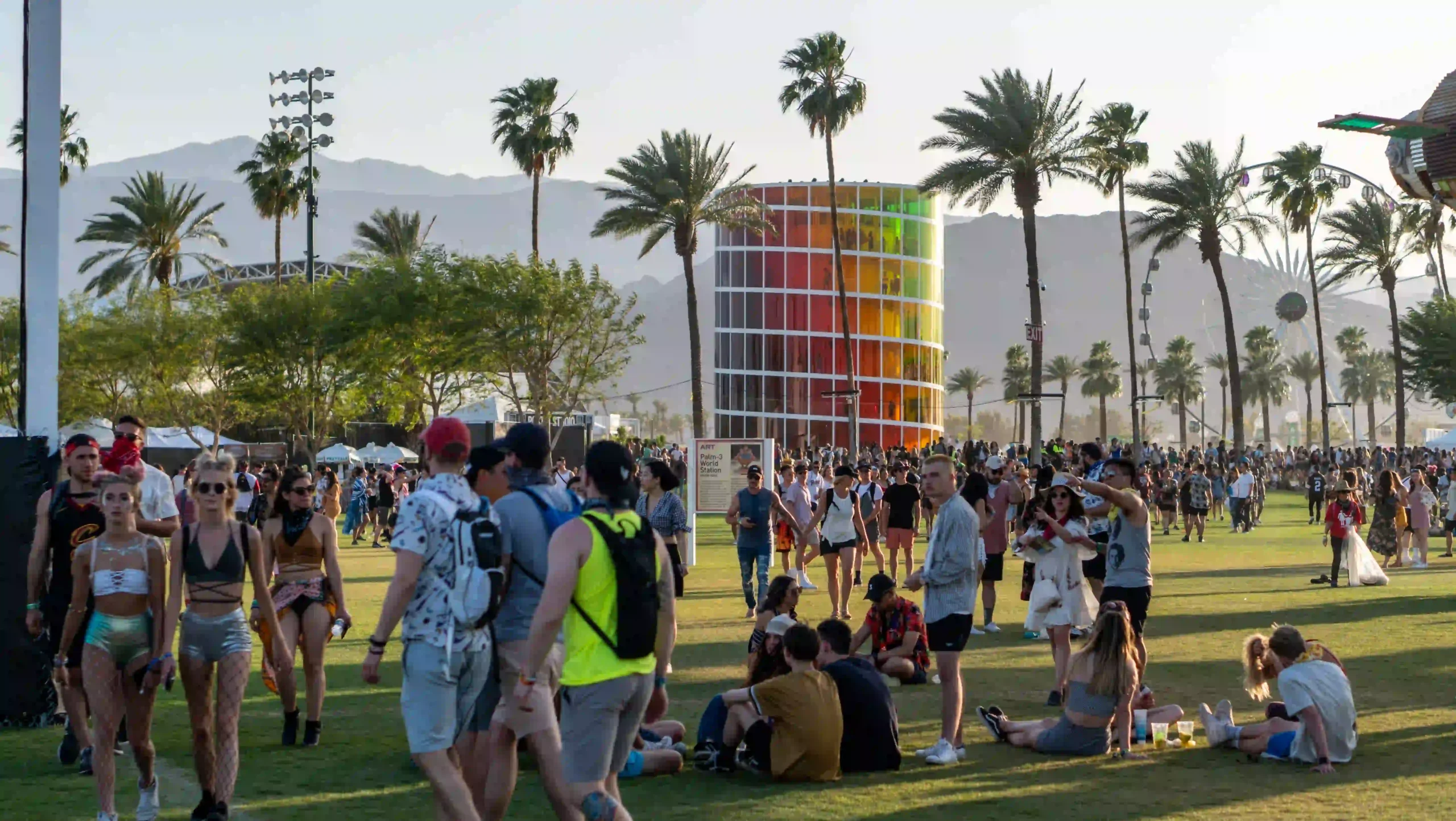
Coachella is the Coachella Valley Music and Arts Festival, an annual outdoor music and arts event held every April in the California desert. It runs across two consecutive weekends with an identical lineup each weekend, drawing roughly 125,000 attendees per day. The full event runs three days per weekend, Friday through Sunday. It is not just a concert. Coachella is a combination of music performances across six stages, large-scale art installations commissioned specifically for the grounds, food vendors ranging from local California restaurants to independent operators, and an enormous camping operation. The art component is taken seriously: installations spanning acres are built specifically for the festival each year and are as photographed as the performances themselves. The festival covers a wide range of genres. Pop, rock, hip-hop, electronic music, indie, and Latin artists all appear across the lineup. The headliners on the main Coachella Stage are typically global superstars who can hold a crowd of 100,000-plus for 90 minutes. The supporting acts, distributed across the Sahara Tent (electronic music), the Outdoor Theatre, the Gobi Tent, and the Mojave Tent, cover a much broader range of styles running simultaneously throughout the day.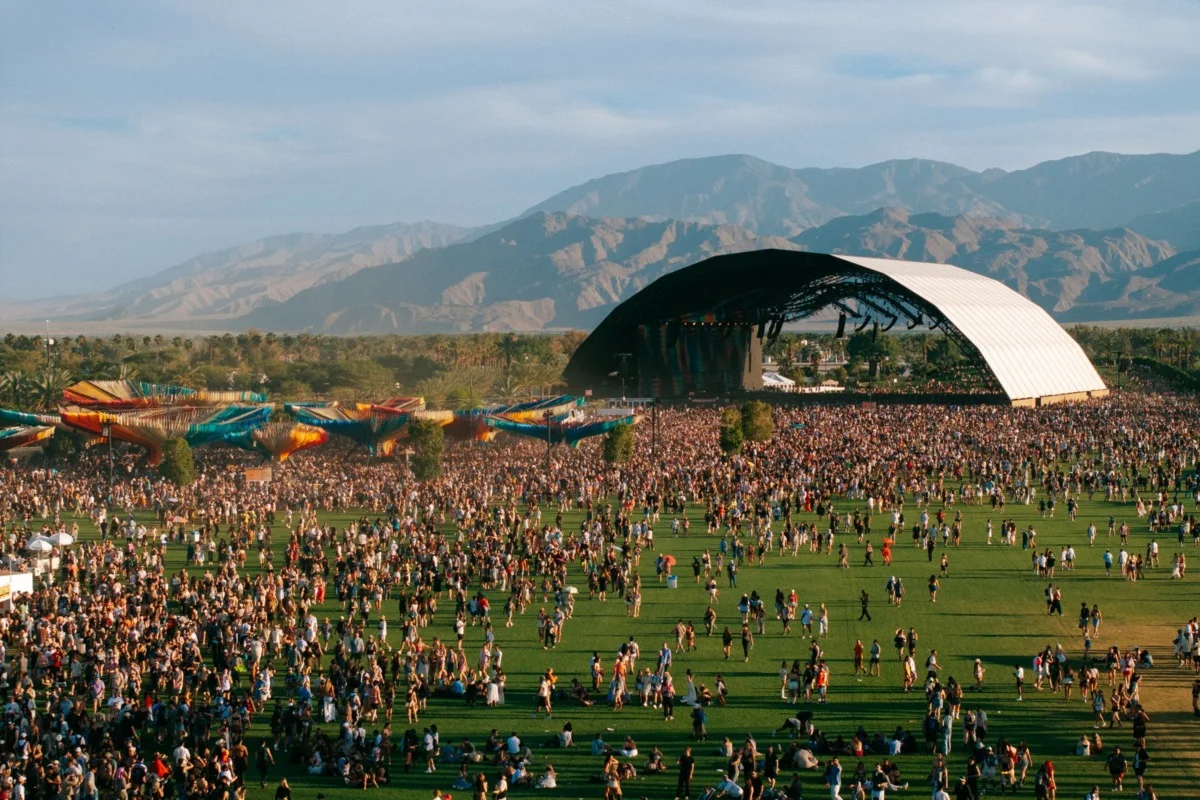
Where Is Coachella Held?
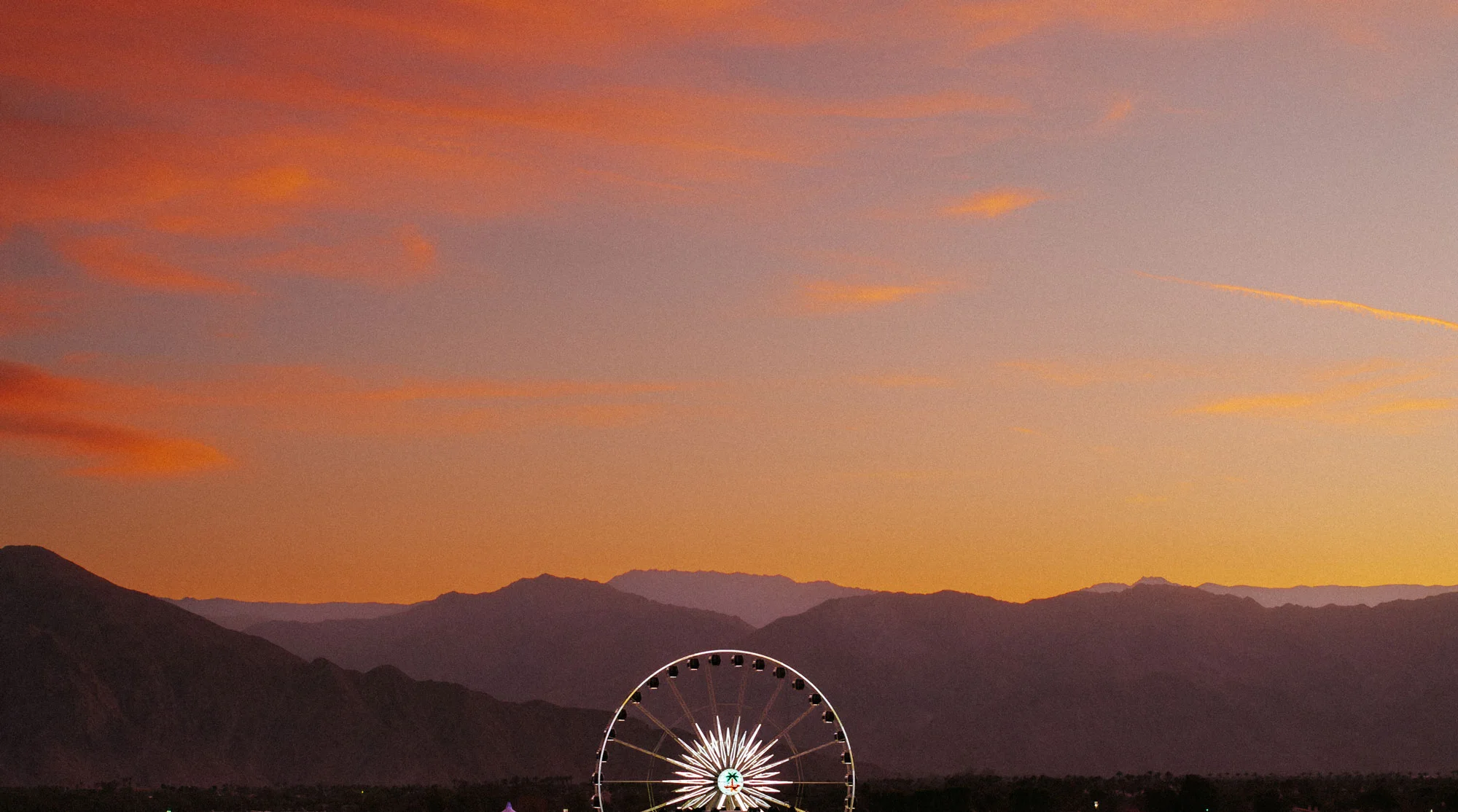
Coachella takes place at the Empire Polo Club in Indio, California. Indio is in the Coachella Valley, a stretch of desert approximately 130 miles east of Los Angeles. The polo grounds provide Coachella’s distinctive layout: flat, open, with wide lawns and clear sightlines across multiple stages simultaneously. Yes, Coachella is always in the same location. The Empire Polo Club has hosted the festival since 2001, after one inaugural year at a different site in 1999. It has not moved and does not rotate. The venue is large enough to accommodate six stages, a full camping operation, art installations spread across acres, and all the logistical infrastructure required for 250,000 people across two weekends. The immediate area around Indio is desert. Daytime temperatures in April regularly reach 38–42°C (100–108°F), dropping significantly once the sun sets. Indio itself is not a major tourism destination outside of festival weekends. Palm Springs, a resort city about 20 miles west, serves as the primary hub for hotels, restaurants, and short-term rentals during the festival period. Most people attending stay in Palm Springs, Indio, or the surrounding Coachella Valley area and travel to the grounds each day.When Was Coachella Founded?
The first Coachella took place in October 1999, over a single weekend. The founding lineup included Beck, Tool, and Rage Against the Machine as headliners. Attendance was modest and the event lost money. But the founder kept pushing. The festival moved to its current Empire Polo Club site in 2001 and shifted from October to its now-fixed April dates. For the next decade it ran as a single-weekend event, growing steadily in scale and reputation. The modern two-weekend format was introduced in 2012, solving the problem of demand far outpacing capacity while effectively doubling revenue. Today Coachella generates over $100 million annually and sells out both weekends within hours of tickets going on sale. As of 2026, Coachella has been running continuously for over two decades, with the exception of 2020 and 2021 when the COVID-19 pandemic forced cancellations. The 2022 return was the first event since 2019.Who Organizes Coachella?
Coachella is organized by Goldenvoice, a Los Angeles-based concert promotion company. Goldenvoice was founded in 1981 and became a division of AEG Presents in 2001. AEG Presents is one of the largest live entertainment companies in the world. Goldenvoice continues to operate as a distinct brand within that structure and handles Coachella’s production, booking, and logistics entirely. Paul Tollett is the president of Goldenvoice and the primary decision-maker on the Coachella lineup. He founded the original festival in 1999 and has run it ever since. Tollett is widely respected in the music industry for his curatorial instincts, particularly his early booking of Latin artists before they crossed fully into mainstream pop audiences. AEG’s involvement gives Goldenvoice significant resources for production and artist booking. The stages, sound systems, art installations, and logistics at Coachella are on a scale that few other festivals can match, and that infrastructure requires a major organization behind it.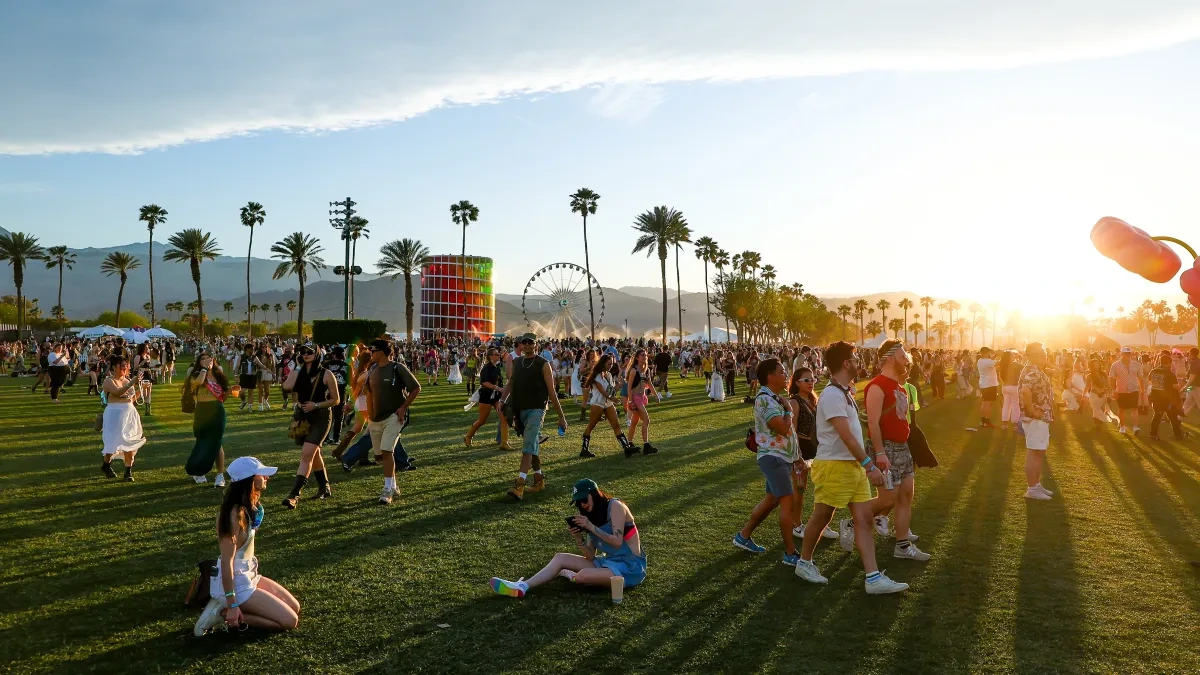
How Does Coachella Work?
Coachella runs across two consecutive weekends in April, typically the second and third weekends of the month. Weekend 1 and Weekend 2 have identical lineups. If you attend either weekend, you see the same artists in the same slots. The two-weekend model exists purely to accommodate demand that a single weekend cannot satisfy. Each weekend runs Friday through Sunday. Gates open around 11am and music continues until 1am or later on some stages. The programming is simultaneous across all six stages, which means conflicts are constant: popular artists frequently perform at the same time, and choosing between them is part of the experience. Tickets are sold per weekend, not per day. General admission weekend passes run approximately $500–$600. VIP passes can exceed $1,200. Camping is available separately through the official glamping options adjacent to the polo grounds, or through standard tent camping. Many attendees stay off-site in Palm Springs or Indio and use shuttle services to the venue.What Happens at Coachella?
The core of Coachella is its music programming. The main Coachella Stage hosts the top-billed headliners each night. The Sahara Tent runs electronic and dance music throughout the day and into the night and has become a destination in its own right with its own dedicated following. The Outdoor Theatre, Gobi Tent, and Mojave Tent all run parallel programming. The Do LaB stage hosts its own schedule of electronic and experimental acts in a more intimate corner of the grounds. But here’s the part most first-timers underestimate: the art. Large-scale installations are commissioned specifically for the festival each year. Some are interactive. Some are purely visual. Many become the most photographed elements of the weekend. The art component is not secondary to the music; it’s central to what makes Coachella different from a standard concert event. Food and drink vendors cover a wide range of cuisines and price points, from local California restaurants to recognizable brands to independent operators. The grounds are large enough that moving between stages takes time, and most people develop a daily strategy for which sets to prioritize and which to catch partially. And that’s just one part of it. Coachella simultaneously operates as a fashion showcase and brand activation space. Corporate pop-ups, brand parties, and satellite events during Coachella weekend have their own parallel economy in the Palm Springs area. Fashion weeks generate less social media content than Coachella weekend does.“Coachella sets fashion trends, creates viral moments that dominate news cycles, and has launched or re-launched careers through high-profile performances.” Goldenvoice / AEG Presents, festival background documentation
How Many People Does Coachella Hold?
Coachella holds approximately 125,000 people per day. Across three days and two identical weekends, total attendance reaches roughly 750,000 people over the full event cycle. That number makes it one of the largest music events in the world by total attendance across a run. The Empire Polo Club grounds are large enough to accommodate that number without the grounds feeling dangerously overcrowded, though the main stage area during headliner sets is genuinely packed. The multiple simultaneous stages distribute crowds across the site, which is part of why the multi-stage format works at this scale.| Metric | Detail |
|---|---|
| Location | Empire Polo Club, Indio, California |
| Dates | Two consecutive weekends, April (Fri–Sun each) |
| Daily capacity | ~125,000 attendees |
| Total weekend capacity | ~375,000 per weekend (3 days) |
| Number of stages | 6 (Coachella Stage, Sahara, Outdoor Theatre, Gobi, Mojave, Do LaB) |
| Founded | 1999 (first event October 9–10, 1999) |
| Organizer | Goldenvoice / AEG Presents |
| Estimated annual revenue | $100 million+ |
| General admission ticket | ~$500–$600 per weekend |
| Music genres | Pop, rock, hip-hop, electronic, indie, Latin |
Is Coachella the Biggest Music Festival in the World?
By revenue, yes. Coachella is consistently cited as the highest-grossing music festival in the world, generating over $100 million annually. No other festival comes close on that metric. By total attendance, the picture is more complex. Coachella’s 125,000 daily capacity across two weekends is enormous, but several European festivals draw larger cumulative crowds across longer runs. Glastonbury in the UK accommodates around 210,000 people for a single five-day event. Beach, Please! Festival in Romania drew over 500,000 attendees in 2025 across five days. Roskilde in Denmark draws over 130,000 across eight days. So the short answer: Coachella is the biggest festival in the world by revenue and cultural impact. It is not necessarily the biggest by total attendance, depending on how you define the comparison. In terms of global media footprint and commercial influence, nothing comes close.How Much Does Coachella Cost?
General admission weekend passes run approximately $500–$600. VIP packages exceed $1,200. But the ticket is only the beginning. Hotel rooms near Indio during Coachella weekends reach $500–$800 per night, significantly above their usual rates. Transportation from Los Angeles requires either a rental car, rideshare, or shuttle service. Food and drink on-site adds up quickly at festival pricing. A realistic all-in cost for attending Coachella from outside California, including flights, accommodation for three nights, the ticket itself, and daily expenses, runs $2,000–$4,000 or more depending on your accommodation choices and travel origin. Whether that cost is justified depends on the lineup and your priorities. For a first-time festival-goer, the scale and production quality are difficult to replicate anywhere. For experienced festival attendees, the cost-per-experience ratio does not always beat European alternatives with equally strong lineups at lower total cost.Why Is Coachella So Famous?
Coachella became famous through a combination of production quality, influential artist bookings, and timing. It was one of the first American festivals to treat production as a genuine competitive advantage: the stages, sound systems, and art installations at Coachella set a standard that influenced the entire industry. The viral moments it has generated are another factor. Beyoncé’s 2018 performance (widely known as “Beychella”) is considered one of the greatest live performances in modern music history. Daft Punk’s 2006 reunion set, a Tupac hologram appearance in 2012, and Prince’s surprise 2008 set have all entered festival mythology. Each of these moments became cultural events far beyond the festival itself. The social media dimension accelerated all of this. Coachella’s timing in April, its visual character (desert setting, art installations, fashion), and the density of public figures who attend have made it one of the most-documented events on the planet. The festival itself generates a second wave of content through all the satellite events, parties, and brand activations that happen in the Palm Springs area during the same weekends. Think about it this way: Coachella is not just a music festival anymore. It’s a cultural calendar event that happens to include music as its anchor.Coachella vs. European Music Festivals
Coachella is the American standard for large-scale music festivals. But Europe runs a parallel circuit that operates differently in almost every respect. European festivals like Glastonbury, Roskilde, and Les Ardentes tend to run longer (five to eight days), cover more genres per event, and cost significantly less in total. A full Glastonbury ticket with camping runs around £340 (roughly $430) for five days. Les Ardentes in Belgium charges around €60–€75 per day. Beach, Please! in Romania offered early bird general access at around $100 USD for five days. None of these require the additional $1,000–$2,000 in accommodation costs that Coachella does. The trade-off is production scale and cultural moment. Nothing in Europe replicates the commercial production budget or the global media footprint of Coachella weekend. For experienced festival-goers who care more about music than spectacle, European alternatives frequently offer stronger lineups at lower total cost. For a summer of European festivals specifically, the guide to the top hip-hop festivals in Europe and the guide to the best underground techno festivals in Europe cover the strongest options across both mainstream and boutique events. And if you want the beach holiday plus music festival combination that Coachella lacks entirely, Fresh Island Festival on Zrce Beach in Croatia delivers exactly that format on the Adriatic coast. Check the Fresh Island ticket page for current availability.What is Coachella and why is it so popular?
Coachella is the Coachella Valley Music and Arts Festival, an annual outdoor music and arts event held in Indio, California, in April. It draws around 125,000 people per day across two consecutive weekends, with a lineup covering pop, rock, hip-hop, electronic music, and Latin artists. It became popular through a combination of production quality that set a new standard for large-scale festivals, a series of legendary live performances that entered cultural mythology (Beyoncé in 2018, Daft Punk in 2006), and timing that coincided with the rise of social media documentation of events. Today it is as much a fashion and brand moment as a music event, which drives its media footprint far beyond what the ticket numbers alone would suggest.Where is Coachella held and is it always in the same place?
Coachella is held at the Empire Polo Club in Indio, California, in the Coachella Valley desert, about 130 miles east of Los Angeles. It has been at the same location since 2001 and does not rotate or move. The venue is large enough to accommodate six stages, camping, art installations spanning acres, and all the logistical infrastructure required for 125,000 people per day. Palm Springs, about 20 miles west of Indio, serves as the main accommodation hub during festival weekends, with hotels, short-term rentals, and restaurants all operating at elevated capacity and pricing across both weekends.Who organizes Coachella?
Coachella is organized by Goldenvoice, a Los Angeles concert promotion company founded in 1981 that is now a division of AEG Presents. Paul Tollett, Goldenvoice’s president, founded the original festival in 1999 and remains the primary decision-maker on booking and production. He is widely respected in the industry for his lineup curation, including early adoption of Latin artists before they crossed into mainstream audiences, and for the consistent investment in production quality that distinguishes Coachella from comparable events. AEG Presents provides the financial and logistical infrastructure behind the operation.How many people does Coachella hold per day?
Coachella holds approximately 125,000 people per day. Across three days and two consecutive weekends, total attendance across the full event cycle reaches roughly 750,000 people. The Empire Polo Club grounds are large enough to distribute that number across six simultaneous stages without the site feeling dangerously overcrowded, though the main Coachella Stage during headliner sets is densely packed. The two-weekend identical lineup model was introduced in 2012 to accommodate demand that a single weekend could not satisfy while keeping the festival experience manageable.Is Coachella always in April and does it happen every year?
Yes to both. Coachella takes place every year in April, typically the second and third weekends of the month. It runs Friday through Sunday across both weekends. The festival has been annual since its founding in 1999, with the only interruptions being the 2020 and 2021 cancellations due to the COVID-19 pandemic. The 2022 event was the first return after that gap. Tickets go on sale months in advance and typically sell out both weekends within hours. The April dates are fixed year to year and tied to the California desert climate, which makes the evenings manageable despite the extreme daytime heat.Is Coachella the biggest music festival in the world?
By revenue, yes. Coachella consistently generates over $100 million annually, making it the highest-grossing music festival in the world by a significant margin. By total attendance, the comparison is more nuanced. Several European festivals draw larger cumulative crowds: Glastonbury accommodates around 210,000 people for a five-day event, Beach, Please! in Romania drew over 500,000 across five days in 2025, and Roskilde in Denmark draws over 130,000 across eight days. By global media footprint, cultural impact, and commercial influence, however, Coachella has no equivalent anywhere in the world.Sources

Julia King has spent the better part of a decade chasing music festivals, weekend getaways, and the kind of travel chaos that makes for a good story afterward — and turned that into a practical, no-nonsense approach to writing about it. She covers everything from Europe’s nightlife scene and underrated party destinations to the gear that makes festival weekends survivable, from power banks that don’t die by day two to earplugs that actually protect your hearing without killing the music; her focus is less on dream-destination lists and more on what will actually happen and how to plan around it. When she’s not researching a new city’s nightlife or testing travel gear, Julia is usually planning her next trip with a festival lineup as the excuse and a backup plan just in case.